
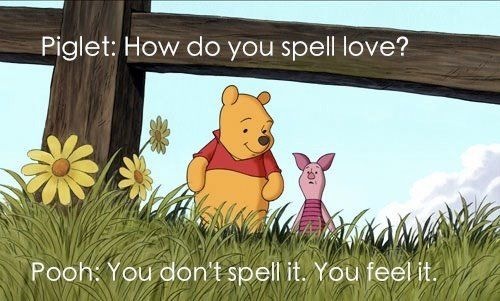
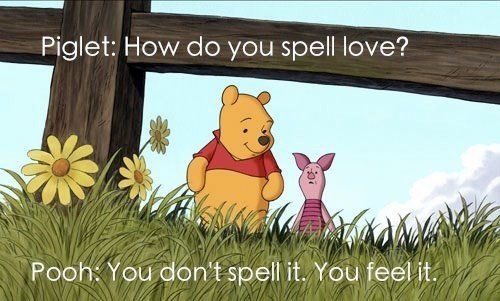
Every truly great book I’ve ever read the author has developed their characters to the point that they become more than words on the page. They’re people. People with faults, feelings, frailties, and triumphs.
These characters become so real to us that we almost hate for their stories to end, yet we can’t quit turning the pages to find out how it ends.
That’s stellar writing.
How do they make us invest in their stories this way?
I believe it’s through developing a voice for each and every character. One that’s unique to them.
This is from Ed Gaffney, the wonderful Suzanne Brockmann’s equally amazing DH 🙂
As lovers of romance, we all know how important it is to create realistic characters. If readers don’t connect with the people in the story we’re telling, they’re going to put the book down. It’s as simple as that. And that’s because it’s virtually impossible to care what happens to someone if you don’t believe the person is realistic. Or if you don’t like or relate to the person. Of if you don’t know the person.
But this isn’t exactly news. Writers — especially romance writers – are painfully aware of the fact that if their characters don’t work, their book doesn’t work. And that’s why we spend so much time building our characters. Height, weight, age, gender, sexual orientation. Eye color, hair color, skin color. Place of birth, parents, children, siblings, marital status. Education, employment. Hopes, dreams, values, beliefs. Likes, dislikes. Strengths, weaknesses, fears.
But one of the most overlooked elements in character — at least from my point of view — is voice. What do your characters sound like? It’s something they reveal almost every time they show up on a page, and therefore it’s an incredibly powerful tool when populating the world you are building. And yet, it’s very often ignored.
Here’s an exercise you can use to help analyze whether you’re using the voices of your characters well. Take a scene from one of your stories, and make a list of what each character says. Then compare the lists. Are they truly distinct? If not, you are not only passing up a huge opportunity to help give your characters the kind of nuance and color we all hope to achieve as writers, but you also risk making your characters less realistic. Because people don’t all sound alike. So there’s no reason in the world why your characters should all sound alike.
Taken from one of the great posts put out by the Romance University
Examples of strong, individual voices:
CONVERSATION WITH NAVY SEALS MARK “JENK” JENKINS, DAN GILLMAN, JAY LOPEZ, AND IRVING “IZZY” ZANELLA
from Suzanne Brockmann’s Headed For Trouble:
IZZY: (uneasy) So how do you know if Suz is planning to toss you into one of those story arcs? I mean, shit. We were all major characters in Into the Storm.
GILLMAN: Obviously, Jenk’s safe. But damn, I could be in serious trouble. I’ve got a major crush on Sophia Ghaffari.
IZZY: (scoffing) Yeah,like you’re going to be the hero of her book. Two words. Dream on, fool.
GILLMAN: Two words—
JENK: Guys. Stop.
LOPEZ: I know I’m not the hero of the next book because Minnie’s cooking dinner for me right now.
IZZY: Minnie?
LOPEZ: Shhh. I shouldn’t have said her name. Bad karma.
GILLMAN: Someone light a match.
IZZY: (to Lopez) You’re actually dating a woman named Minnie?
JENK: (to Gillman) He didn’t fart, he just said her name.
GILLMAN: I thought it might help.
LOPEZ: Make fun of me all you want, Zanella. You just wish you were getting some of her manicotti tonight.
GILLMAN: (cracking up) I’ve heard it called a lot of things …
Brockmann, Suzanne (2013-04-30). Headed for Trouble (Troubleshooters) (pp. 118-119). Random House Publishing Group. Kindle Edition.
Each person has his own distinct way of talking and together they’re so much fun to read. You can actually feel the bond between these guys even though they constantly rib the hell out of each other 🙂
J.R. Ward’s Blood Kiss
This is between the brother, Vishous, and his best bud, Butch:
I need to go on a date, he thought. “Where are we going?” V asked in his ear.
Shit, he’d said that out loud. “Not you.”
“Hurt. Seriously hurt over here,” came the tinny reply.
“Marissa and I need. . . .”
“If it’s sex ed, I could have sworn you two figured that out. Unless all those sounds are just the pair of you thumb-wrestling.”
“Really.”
“You’re saying that shit is origami? Jesus Christ, the paper cuts . . . can’t fucking imagine, true?”
Ward, J.R. (2015-12-01). Blood Kiss: Black Dagger Legacy (p. 93). Penguin Publishing Group. Kindle Edition.
This is a perfect example of characterization by voice. Anyone who has read the BDB series (Black Dagger Brotherhood) knows of Vishous and his love of Butch (mostly platonic) and his propinquity for sarcasm. And “true” is his phrase.
You can easily tell who is speaking here and even something about their personalities. All in one paragraph. Brilliant.

Always strive to bring your characters to life on the page. In both of the examples above, we connect with them because of their humor and sarcasm. I think those two traits are as integral to strong characterization as insecurities and imperfections. We don’t fall in love with super heroes, (unless you’re Lois Lane) we fall for heroes and heroines who remind us of ourselves.
Your readers will thank you by holding a place for them in their hearts.
 Jacquie Biggar-USA Today Best-selling author
Reblogged this on Sisters of Suspense.
LikeLiked by 1 person
Thank you!
LikeLiked by 1 person